The History of Responses to LGBT+ Domestic Abuse
The History of Responses to LGBT+ Domestic Abuse
Building on previous events at Durham University and the University of Westminster, we reached out to a range of activists, practitioners, policymakers, and researchers to ask them about the history of the movement to respond to LGBT+ domestic abuse, including key milestones. We then brought this history together and hosted a one-day event at Durham University in March 2025, which included a timeline, as well as keynotes from pioneers and calls from the field about visions for the future.
The History of the Movement and a Vision for its Future
Understanding our past: the journey so far
We asked three questions of people who have been involved in the LGBT+ domestic abuse movement across England, Scotland, and Wales over the last twenty years:
- What has been their contribution to the LGBT domestic abuse sector
- What are the milestones over the last 20 years
- Who/ what organisations should be included in the history
The timeline is not comprehensive and is a work in progress (and we are conscious too that it is England-heavy). If you have any information about the history of the LGBT+ domestic abuse sector, please email [email protected] and tell us so that we can add it to the timeline.
The legacy and the future
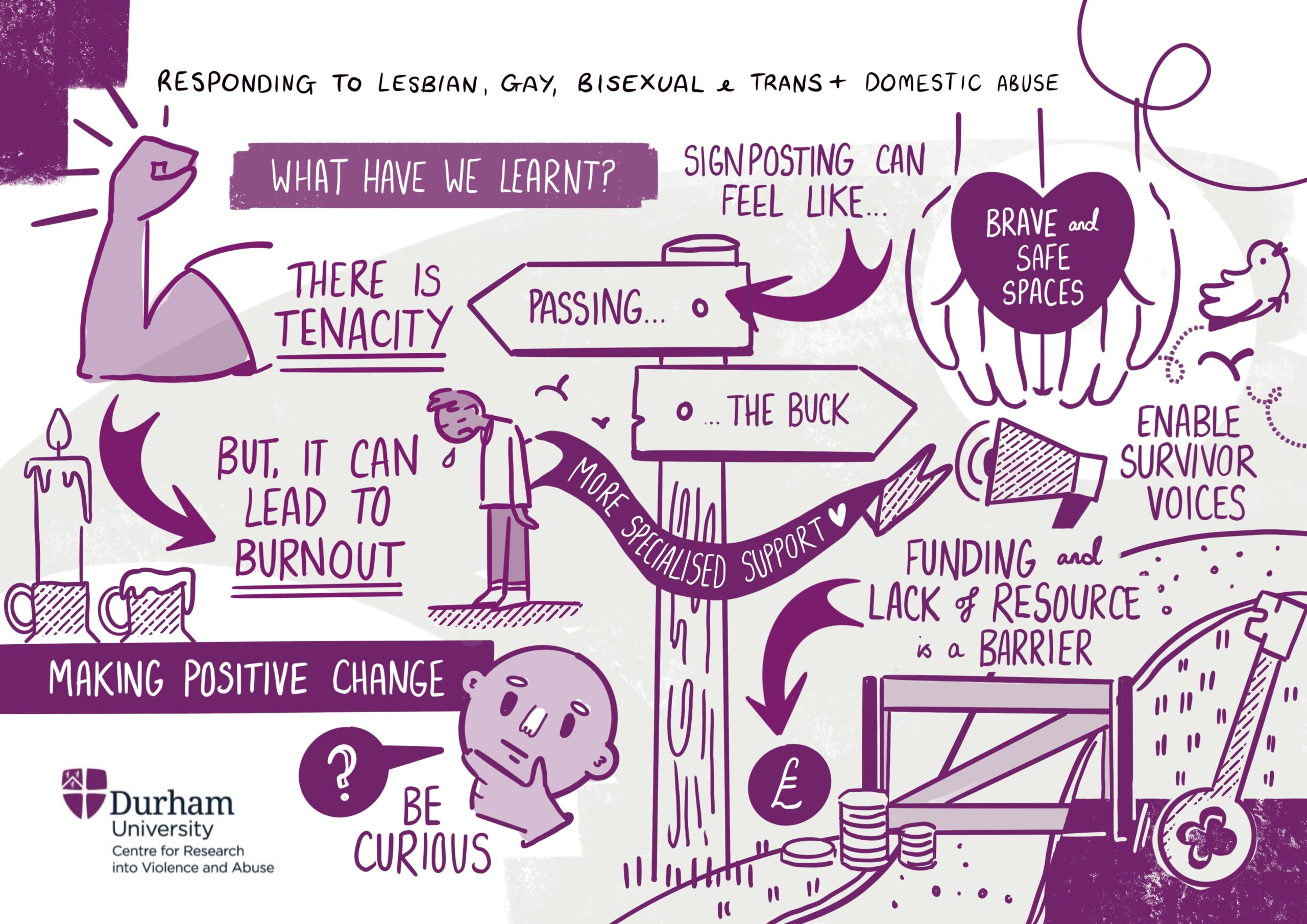
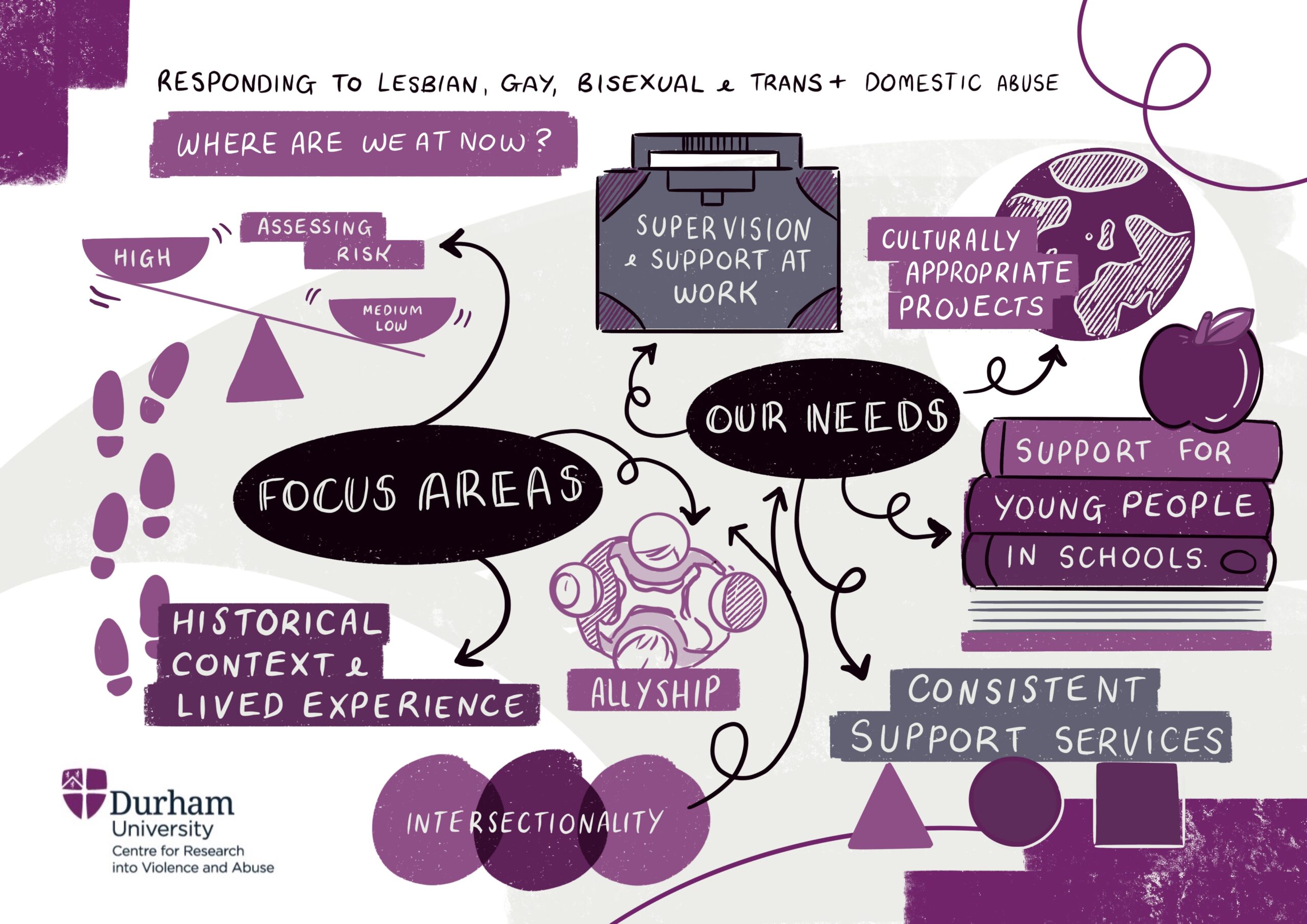
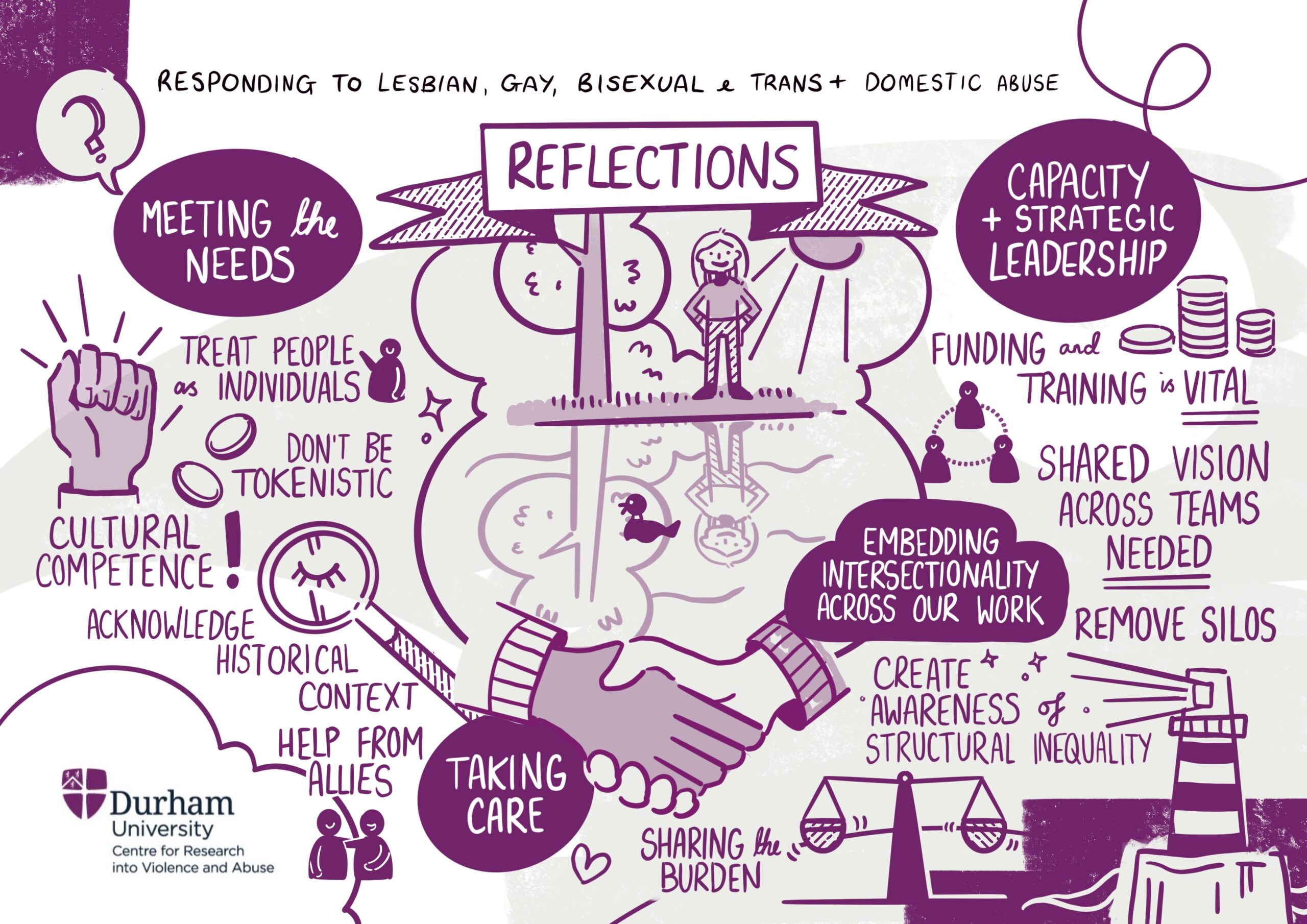
Our focus was on what ‘what have we learnt’ and ‘where are we now? Across our conversations, there was a recognition of sources of strength and also persistant challenges:
Sources of strength
- The tenacity, determination and commitment of the sector – to keep going, meet the need, develop, learn,
- Dedicated individuals drive innovation, seek funding, and build connections across the sector and with policymakers. These individuals often work behind the scenes at local, regional, or national levels
- Research plays a crucial role in supporting the sector — providing evidence, strengthening credibility, and influencing strategy
Persistent challenges
- The sector’s work is often undervalued and underfunded
- Short-term funding creates instability, burnout, and loss of expertise
- Family-based abuse remains under-recognised in LGBT+ domestic abuse responses
- Ongoing struggle for visibility and recognition within the broader domestic abuse and wider Violence against Women (VAWG) sector
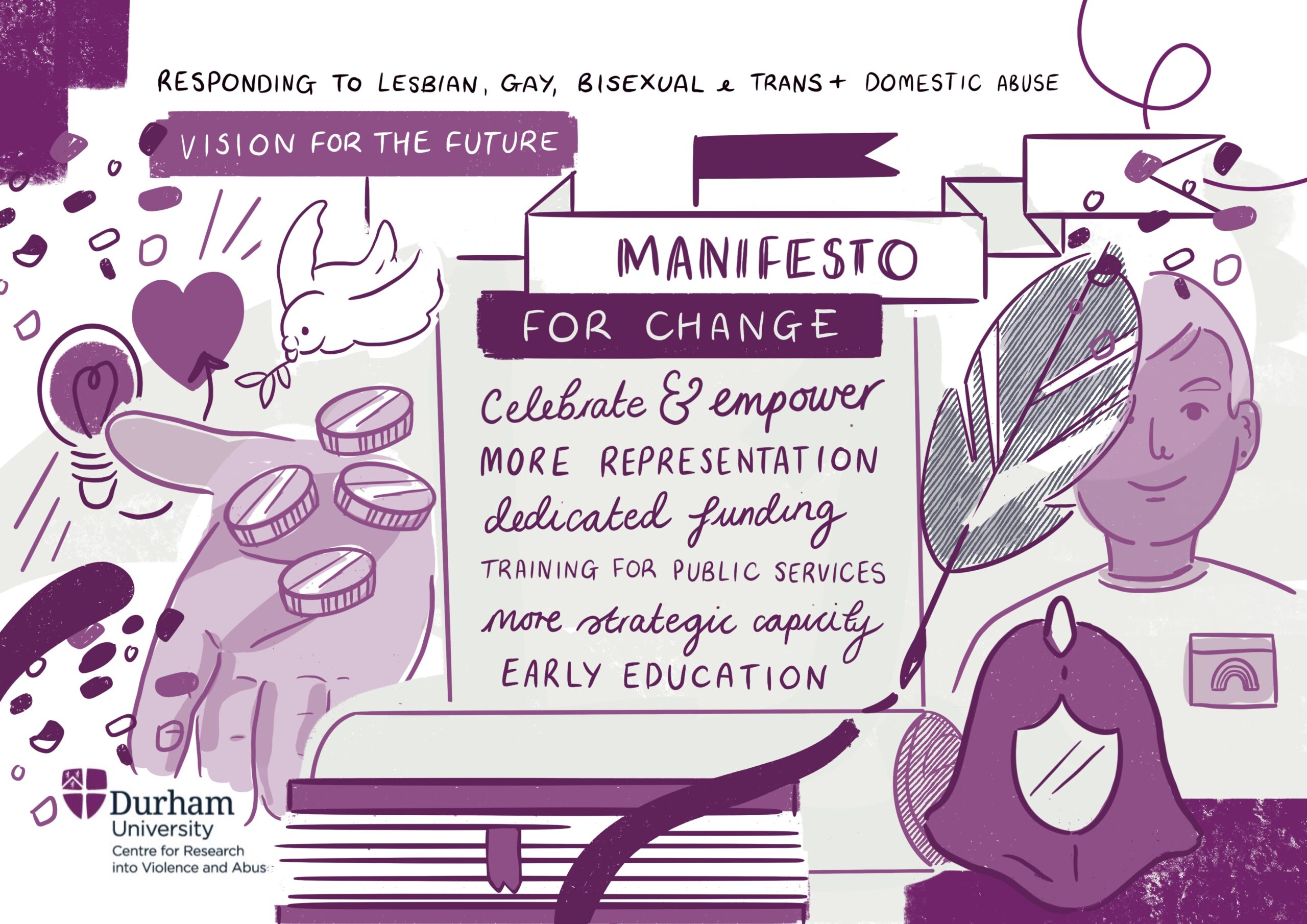
The future: a manifesto for change
To bring our conversations together, we also discussed the future and a manifesto for change. Collectively, attendees agreed that there is an urgent need for a coordinated sector voice, sustained research and investment to:
- Ensure all LGBT+ survivors are heard
- Strengthen specialist services
- Make sure support is accessible, inclusive, and effective
Live Scribe Images
During the event, these Live Scribe images were produced to capture our discussions in terms of ‘what have we learnt’, ‘where are we now?’ and ‘a manifesto for change’.